Salesforce implementation guide: phases, timeline and checklist
The five phases of a Salesforce implementation, what happens in each, what drives the timeline, and a checklist to use before you sign a statement of work.
Read the full post →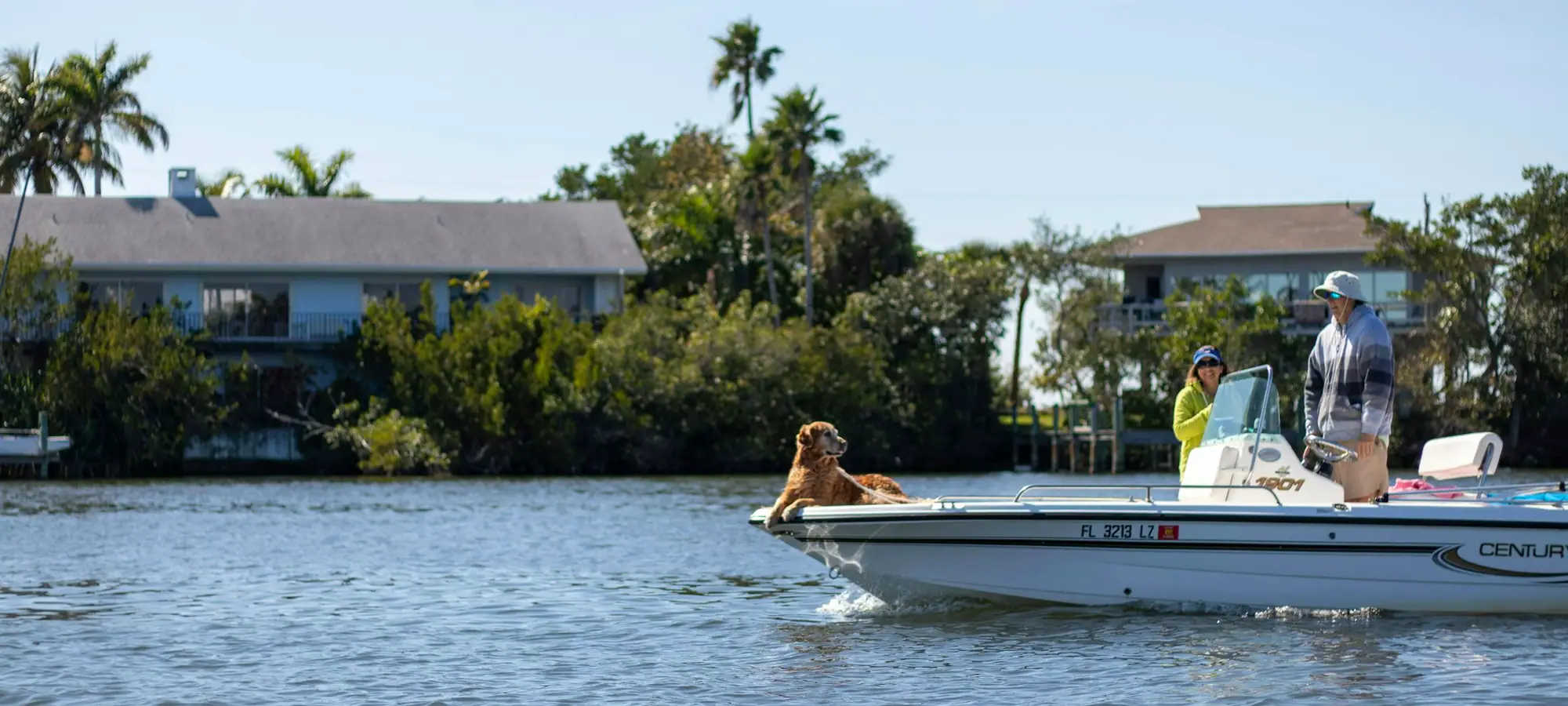
We work with Space Coast aerospace and defense contractors, communications companies, business-aviation manufacturers, R&D firms and health care providers on Salesforce.
Photo: Sawyer / Unsplash
Abstrakt Solutions is a Salesforce Consulting Partner serving companies across Brevard County, from Titusville south through Melbourne to Palm Bay, remotely and on site. Melbourne is one of our focus markets.
Brevard County runs a long way along the coast, so we usually plan on-site days around one end of it, either Titusville in the north or Melbourne and Palm Bay in the south. It is a short flight from St. Louis, and since Brevard keeps Eastern Time, our Central workday trails yours by an hour.
Figures cover the Palm Bay-Melbourne-Titusville, FL Metro Area (FL).
The Palm Bay–Melbourne–Titusville metro is Brevard County, and in BEA data its biggest private sector is manufacturing, followed by professional, scientific and technical services, a pairing that reflects the county’s aerospace and defense base. The Economic Development Commission of Florida’s Space Coast says the area has the largest share of STEM-related jobs in Florida and one of the nation’s largest concentrations of communications-sector employment. An aerospace and defense contractor that the EDC calls an agile global technology innovator lists its business address in SEC filings on West NASA Boulevard in Melbourne.
Much of the recent growth shows up in project announcements the EDC highlights. A defense prime relocated a missile-program headquarters to Titusville in a $40 million project the EDC ties to 350 new jobs; a Brazilian aircraft maker has announced four projects with more than 1,100 jobs and over $155 million in capital investment; and the EDC cites a project by another large defense contractor to create 1,000 jobs with a $61 million investment. A private spaceflight company is also on its list of major investments. Around them sit Florida Tech’s 100,000-square-foot VERTEX Applied Innovation Hub for applied R&D, the Groundswell Startups coworking community, and a NASA technology docking assistance program run by the EDC.
Largest private sectors, 2024 GDP share.
Aircraft, spacecraft and defense-technology builders and the suppliers around them make up much of Brevard’s manufacturing base, with long programs and configured products that call for careful quoting and ERP integration.
Engineering, applied R&D and communications-technology firms near Florida Tech and the prime contractors track teaming partners, bids and contract vehicles, which suits Sales Cloud built around a defined pursuit process.
Hospitals, clinics and home-health agencies serving a county that stretches from Titusville to Palm Bay need patient outreach, referral tracking and service designed with privacy in mind.
Contractors putting up industrial facilities, offices and homes as aerospace projects land in the county need estimates, subcontractor schedules and job costs tracked together.
Regional target sectors: Aerospace & Defense, Communications, Advanced Manufacturing, Aviation (business aviation), Applied R&D / STEM-intensive industries (Economic Development Commission of Florida's Space Coast)
Defense and space contractors commonly pursue work through bids, teaming agreements and contract vehicles that a standard B2B sales process does not model well.
Companies serving defense customers often face firm limits on where data lives and who can see it, so Salesforce access design needs attention before sensitive information moves in.
Firms scaling up around new programs frequently add people faster than they add structure, and partner and customer data ends up scattered across spreadsheets and inboxes.
Client names are anonymized and these projects are not specific to Melbourne. All case studies →
Written by the consultants delivering the work.
The five phases of a Salesforce implementation, what happens in each, what drives the timeline, and a checklist to use before you sign a statement of work.
Read the full post →Model each pursuit as an opportunity tied to the end customer, and add a related list of teaming partners showing their role, workshare and agreement status. Track proposal milestones such as drafts, color reviews and submission as stages or on a custom object, depending on how formal your process is. Keep controlled technical data out of Salesforce and link to your approved repository instead. Dashboards or Tableau can then show win rates by customer and partner.
Start with clean account and contact structures for each OEM site and buying group, then build quoting around your real part numbers and price agreements. Revenue Cloud handles configured quotes and approval rules, and an ERP integration keeps order and shipment status in front of reps. Add Service Cloud once sales is stable, so warranty questions, returns and technical requests become tracked cases instead of email threads. Phasing the work this way avoids rebuilding later.
Usually less than you expect at first. Sales Cloud with a simple pipeline, clean web lead capture and a few dashboards covers most early needs. Decide early how you will track investors, grants and pilot customers, because those relationships often begin before revenue does. Build on standard objects where you can so the org is easy to extend, and schedule a health check after your first year of growth to catch shortcuts before they harden.
Last reviewed September 26, 2026.
A monthly brief for the people who own Salesforce, AI and revenue technology
What changed in Salesforce and AI this month, and what to do about it.
One email a month. Written by the consultants who deliver the work, not by a marketing team, for the leaders who make the technology decisions.
Consultant analysis, not vendor recaps. One click to leave.